How NOT to get scammed in Rome: Tricks tourists fall for
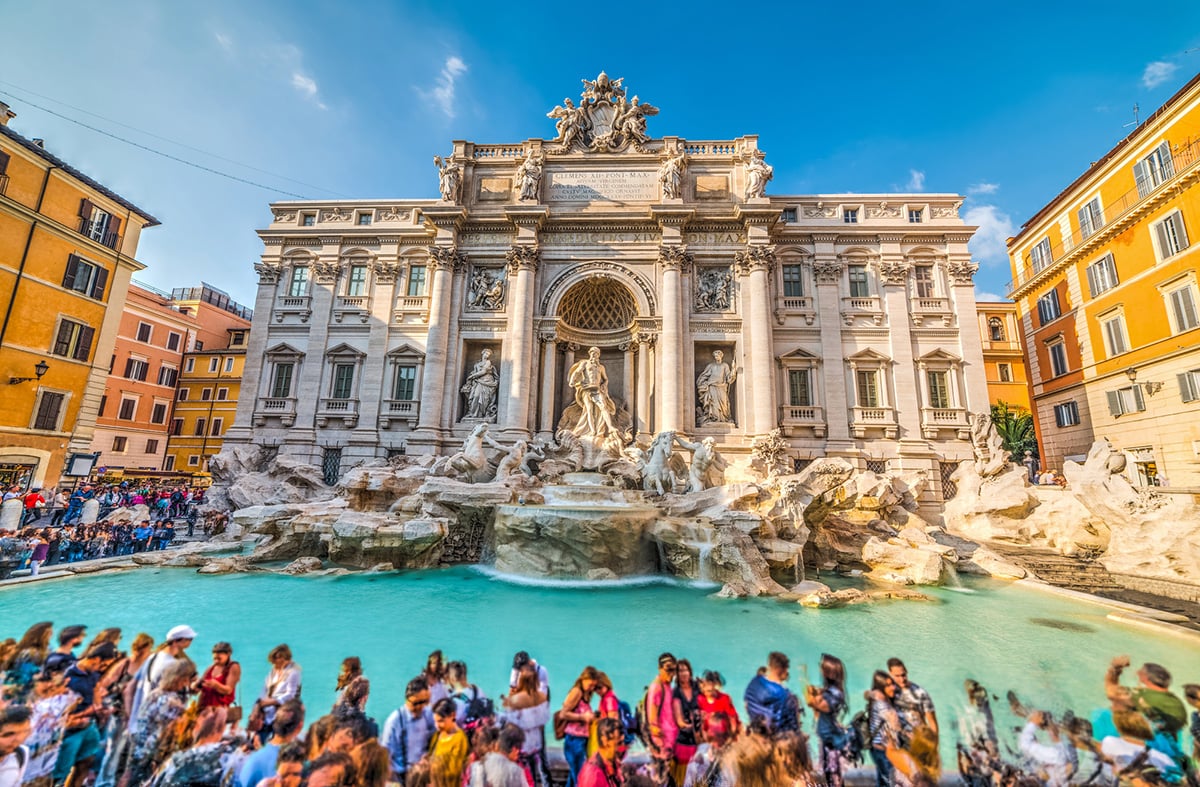
Rome is one of the most wonderful, ancient, yet modern, simple, yet sophisticated cities I’ve ever been to. It is also one of the most visited cities on earth. Nearly 23 million people wandered the ancient streets in 2025.
And where tourists gather in great numbers, so too do the people who make a nefarious living off them. Abusing their goodwill, causing distraction and luring their trust.
Read this guide and forward it to your Italy-bound friends, to get yourself schooled on some of the pesky scams you might come across.
In this post I cover the Shell Game, the Friendship Bracelet, the Fake Cop, the Colosseum Tout and more…
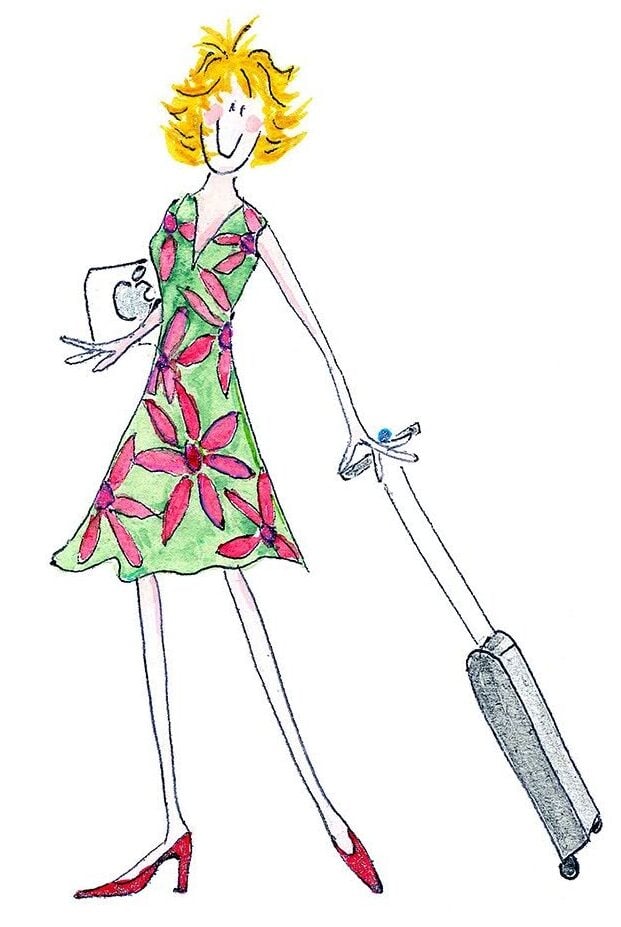
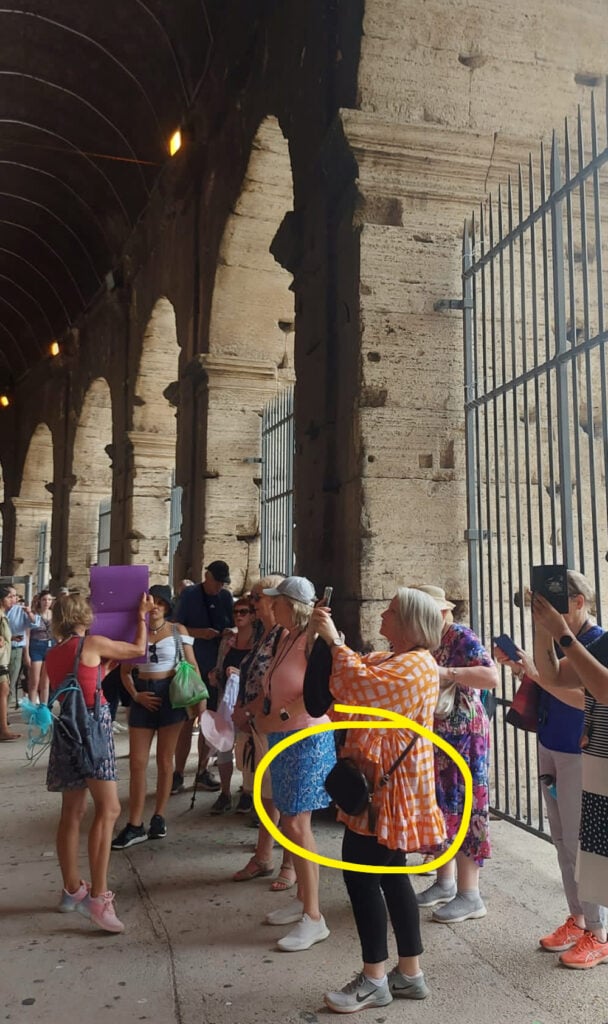
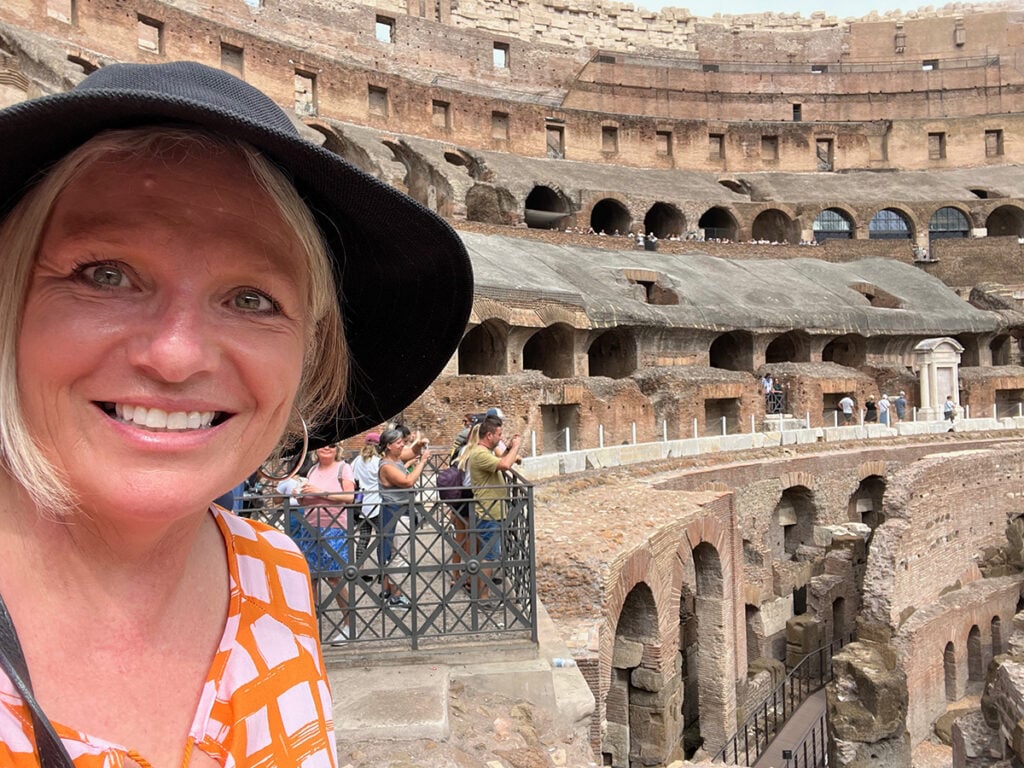
And then there’s the general commonsense about not making your belongings too inviting – like I am borderline doing in this pic as I leave my handbag open to take a photo.
Haven't got time to finish this post now?
The first thing to know is the scams here are highly sophisticated. They are engineered, rehearsed and run by organised groups with assigned roles.
If you do find yourself engaging with these scams below, this post will give you some tips for getting out – with your wallet intact!
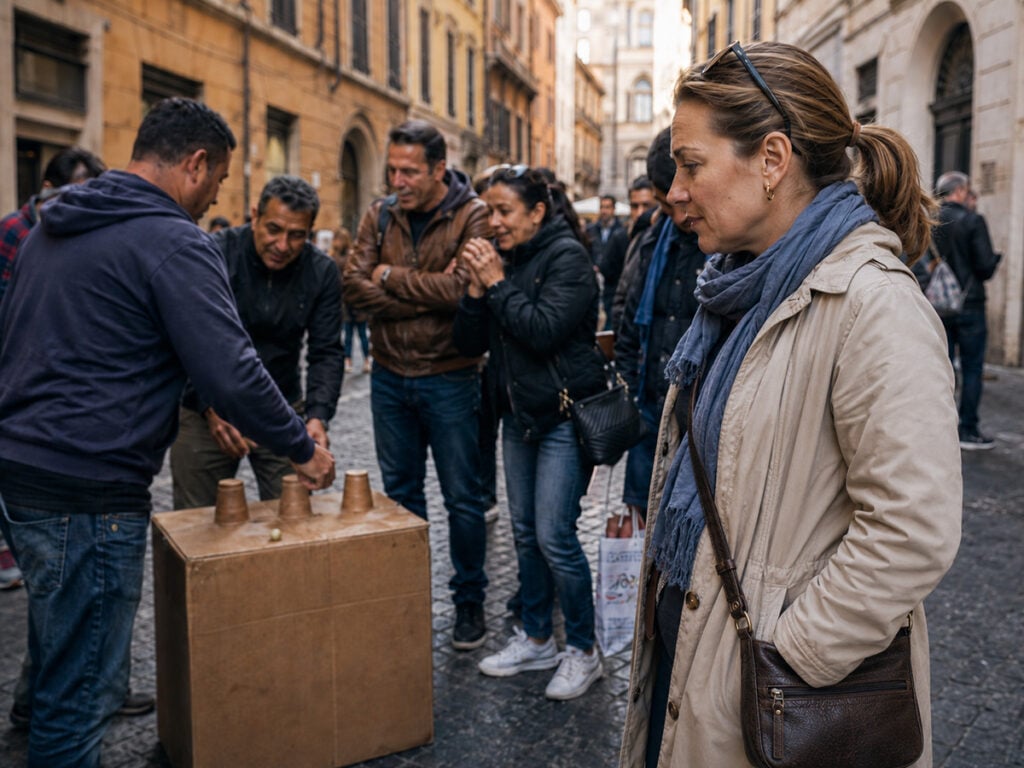
Spotting the shill at the Shell Game
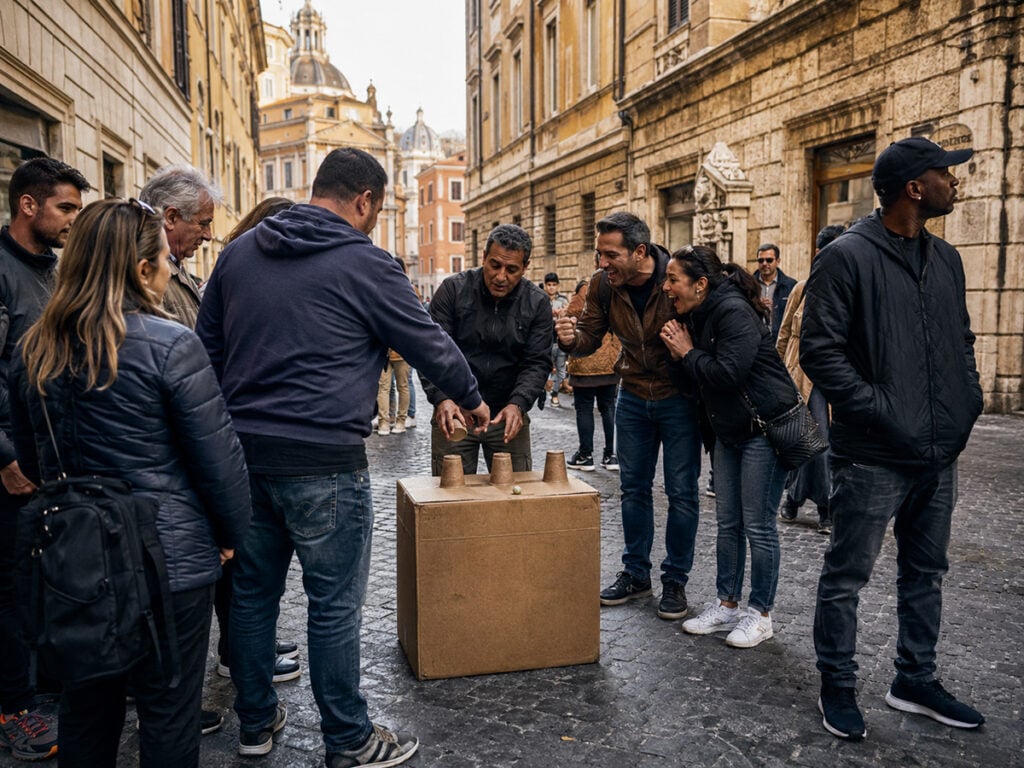
The shell game looks like harmless street theatre: someone rapidly shuffling cups on a cardboard box with a shell under one of them, while a small crowd cheers, gasps and “wins” money. They will try and get you to play and guess which cup is hiding the shell.
But spot the shill – your giveaway that a scam is taking place in any game actually, not just the shell game.
The shill pretends to be an innocent tourist, a bystander, or a fellow gambler to engineer a false sense of safety around you. The psychology is friendly but merciless. Every member of the team has a role. Here is how to read them:
The overly enthusiastic winner: Real tourists are cautious. A shill wins easily, loudly celebrates their cash prize, and actively encourages others to try. If someone in the crowd seems bizarrely delighted at winning a street game, they are working for the house.
The “obvious” mistake maker: A shill will play a round and deliberately make an absurdly obvious error — pointing at entirely the wrong cup, groaning theatrically. This is designed to trigger your ego: surely I can do better than that idiot. The answer is: no. You cannot win. The game is not real.
The lookouts: Stand back slightly from the circle and look for one or two individuals at the edges, not watching the game, but scanning the street. They are watching for the Polizia and will give a signal to dismantle the operation in seconds.
The vibe check: If a crowd feels manufactured, i.e. a group of people clustered around a box or table in a side street near a major landmark — it is a trap. The atmosphere is a stage set. Walk past it without making eye contact.
The rule with no exceptions: Street gambling games in Italian cities are universally rigged. This is not a skill issue. There is no angle, no technique, and no lucky moment that wins you money. The only decision is whether you play at all. The correct decision is always no.
Other scams you might encounter in Rome
These are the other tricks being actively run in Rome right now.
The Friendship Bracelet: Someone ties a bracelet around your wrist before you can object, sometimes grabbing your arm, and announces it is a gift. Once secured, they demand €10–20 and become aggressively persistent, following you or causing a scene if you refuse. These operators work in organised groups with their own lookouts.
What to do: never allow anyone to tie, attach, or place anything on your person without your explicit consent. Walk away immediately.
“He already had the knot tied before I even knew what was happening. When I said I didn’t want it, he grabbed my arm and wouldn’t let go until his friend stepped in front of me. We gave them €20 just to get away.”
The Colosseum Ticket Tout: Given 12 to 15 million people visig the Colosseum every year, the area is plagued by unofficial sellers. Some sell genuine skip-the-line tickets at inflated prices; others sell worthless paper.
What to do: Official timed-entry tickets cost €18 for a 24-hour pass on the official website. Or book a guided tour from a reputable site like this on on Get Your Guide.
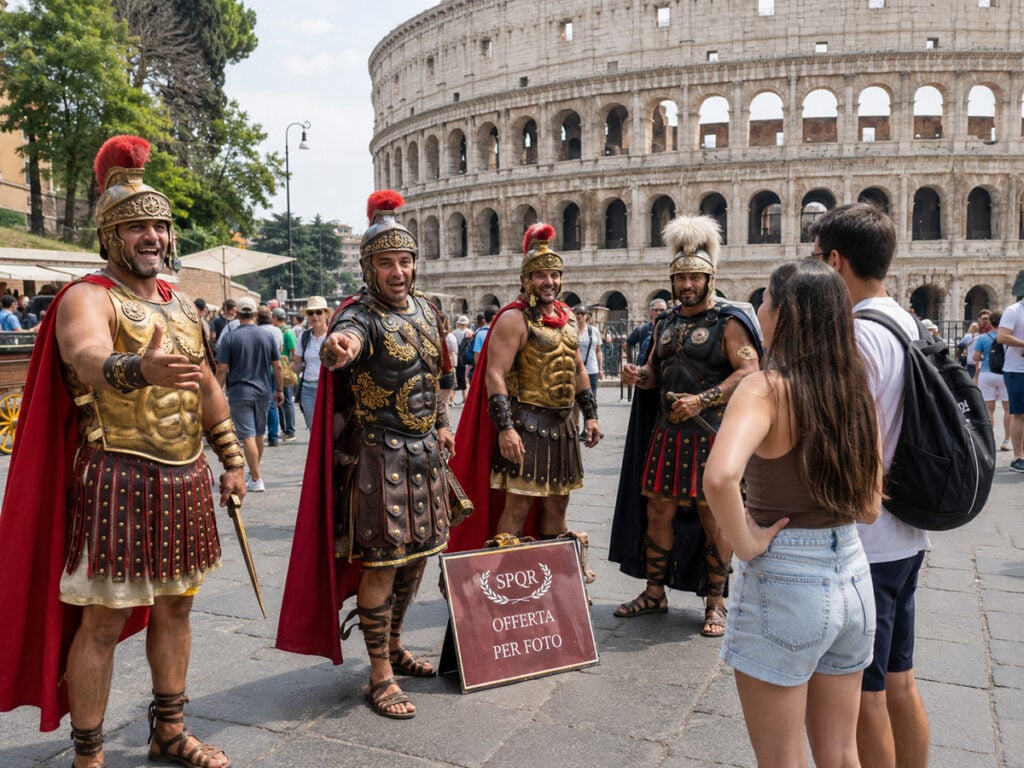
The Gladiator Photo: Costumed gladiators and centurions work the area outside the Colosseum and pose for photos, then demand payment, sometimes becoming aggressive. Posing as these characters to charge for photos is banned under Rome’s rules, with fines up to €400 for the operators.
What to do: If someone in costume approaches you, simply keep walking.
The Fake Plainclothes Police Officer: Someone approaches claiming to be an undercover detective, flashing an official-looking badge. They say they are investigating counterfeit currency and need to inspect your wallet or passport. In 2025, some of these operations use more convincing badges and even stage a phone call to their “station.”
What to do: ask for their badge number, tell them you want to verify their identity by calling 112 (or 113), and insist that any issue will be addressed only at a police station not on a street corner.
The Fake Transit Ticket: Unofficial sellers inside the corridors of Termini, Ottaviano, and Colosseo metro stations sell transit tickets or day passes at face value, claiming the machines are broken or sold out. The tickets are typically invalid, expired, or already used. You will only discover this at the turnstile and may then face a fine from a transit inspector.
What to do: always use official ticket machines or the official Atac app.
The Pigeon Man: A stranger presses grain into your hand near a piazza, whistles, and suddenly you are covered in pigeons while their accomplice photographs the moment. They then demand money for the photo.
What to do: Just walk away immediately and keep your hands in your pockets near piazzas if in doubt.
Restaurant Overcharging Near Landmarks: Not an overt scam, but restaurants within 200 metres of St Peter’s Square routinely charge €30–50 per main course for food that costs €10–15 two streets away.
What to do: Walk a few streets from any major landmark before sitting down, and check the menu — including cover charges (coperto) — before ordering.
Avoid getting fined in Rome
Rome has introduced increasingly steep penalties in recent years, both for the scammers and, in some unfortunate cases, for confused tourists caught in ambiguous situations.
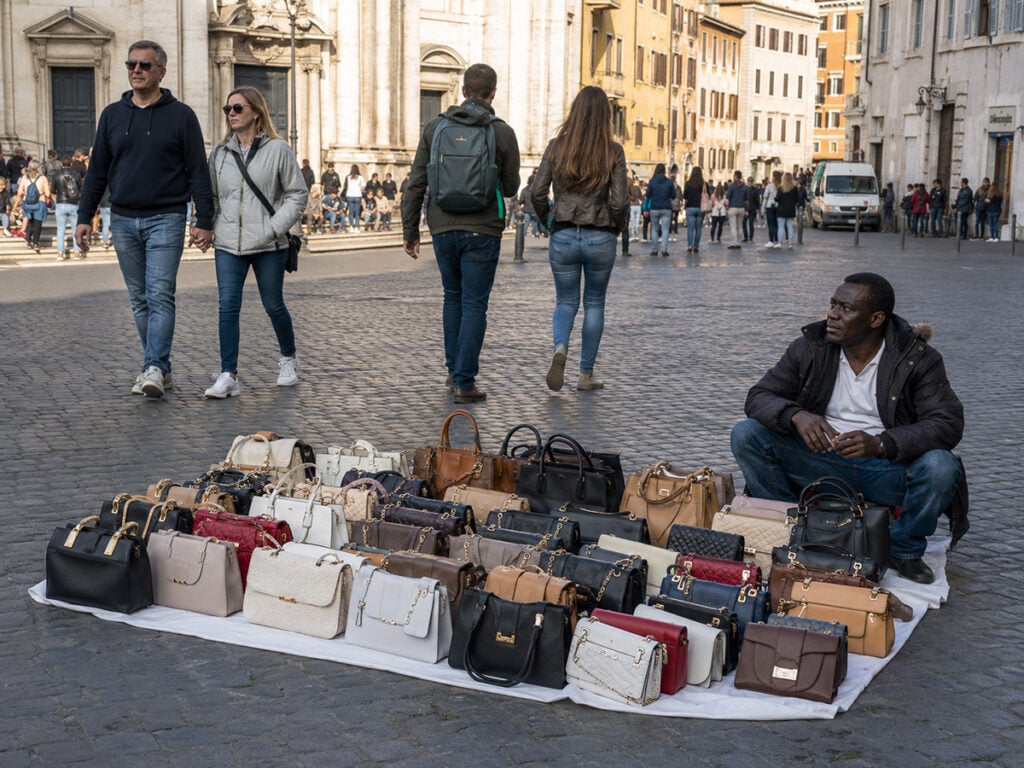
Don’t be tempted by sellers peddling fake handbags. They make no pretence that that’s a fake Gucci, Prada or Channel, but if you see them suddenly scoop up the blanket laden in said fakes and run, you’d better make sure you don’t have one in your hands, as buyers of fakes can also be fined in Italy. Up to €7,000!
Unvalidated transit ticket: Not a scam, but an expensive mistake you could make. Multiple tourists have reported being fined over €200 for unvalidated tickets on overcrowded buses even when holding valid, just-purchased tickets they could not physically reach the validator to stamp. Transit inspectors have limited discretion.
What to do: Validate your ticket the moment you board, before you move away from the door, regardless of the crowd.
Gladiator costume operators: €400 is the maximum fine for those dressing as a centurion or gladiator to charge tourists for photos near the Colosseum. Don’t encourage them by asking for a photo (get a cheeky selfie with them in the distance 😉
Eating on church steps: up to €400 fine. Do not sit down to lick your gelato or have a picnic on church steps or monuments as that carries a penalty.
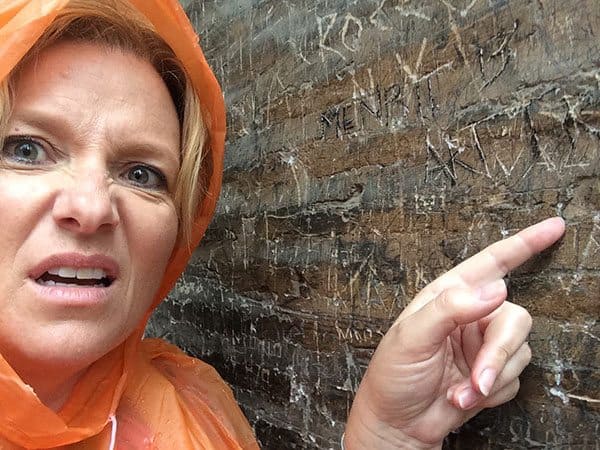
Colosseum vandalism: This gets my goat as there is SO much graffiti carved into the ancient stone walls of the Colosseum. A Russian tourist received a €20,000 plus a 4-month suspended sentence after carving initials into the amphitheatre wall.
Read my best tip for seeing the Colosseum which includes some fascinating facts I bet you won’t know!
What to do if you get scammed
- Being scammed does not make you foolish. These operations are run by professionals who have spent years refining their techniques. Here is the practical response:
- Report to the Polizia di Stato immediately and file a denuncia (formal report). This is essential for travel insurance claims.
- If a plainclothes officer demands money on the street, refuse and insist on paying at a police station. Call 112 or 113 to verify their identity.
- If a restaurant threatens to not let you leave over a disputed bill, call 112. You are legally entitled to an itemised receipt (ask for the scontrino).
- Contact your bank immediately if any card was inspected or left your sight. The first time I was ever scammed was in Florence when they took my card out of sight to swipe it.
- Contact your embassy if documents were taken.
Good news!
Rome is actually very safe. Violent crime is rare, and the city generally ranks well for personal safety. Your main concerns will be opportunistic petty crime such as pickpocketing and bag-snatching in crowded tourist areas and on public transit.
Read more of my Rome and Italy posts
Get out of the main city and into some of the hidden gems in and surrounding Rome
Head up the coast and stay at one these Cinque Terre villages. Here’s how to choose which one to stay in
This is how we spent three wonderful days in Venice